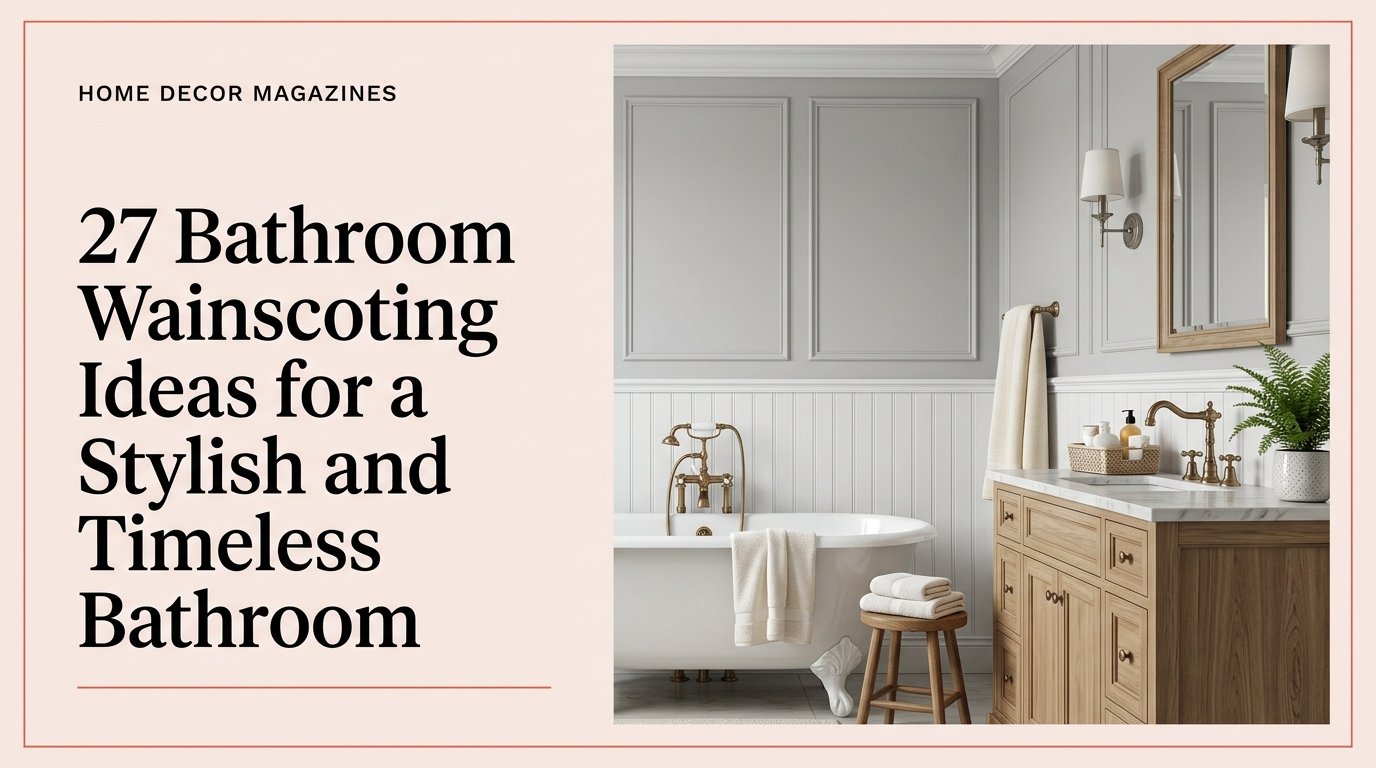
Bathroom wainscoting is one of the easiest ways to add architectural character, texture, and visual interest to a bathroom. From classic white beadboard to modern board-and-batten, raised panels, painted wood, and tile, there are countless ways to use wainscoting without making a bathroom feel dated.
Wainscoting can also help protect lower walls from everyday splashes, scuffs, and wear. In bathrooms, however, choosing the right material and keeping traditional wood panels outside direct shower spray areas is especially important. PVC and other moisture-resistant options are better suited to humid spaces.
Whether you’re remodeling a small bathroom, powder room, guest bath, or primary bathroom, these bathroom wainscoting ideas can help you find the right style, height, color, and material for your space.
27 Best Bathroom Wainscoting Ideas
- Classic white beadboard
- Modern board-and-batten
- Raised-panel wainscoting
- Navy blue wainscoting
- Two-tone bathroom walls
- Half-wall wainscoting
- Tall wainscoting
- Small bathroom wainscoting
- Powder room wainscoting
- Gray bathroom wainscoting
- Green wainscoting
- Black wainscoting
- Bathroom wainscoting with wallpaper
- Wainscoting behind the vanity
- Wainscoting around a freestanding tub
- Beadboard with a chair rail
- Vertical panel wainscoting
- Picture-frame molding
- Modern flat-panel wainscoting
- Tile wainscoting
- PVC bathroom wainscoting
- Wood-look wainscoting
- Floor-to-ceiling wall paneling
- Cottage-style bathroom wainscoting
- Farmhouse bathroom wainscoting
- Luxury bathroom wainscoting
- Color-drenched bathroom wainscoting
1. Classic White Beadboard
White beadboard is one of the most timeless bathroom wainscoting ideas.
The narrow vertical grooves add subtle texture while keeping the room bright and visually clean. Pair white beadboard with white walls for a traditional look, or use a contrasting wall color above it for more impact.
Beadboard works especially well with:
- Cottage bathrooms
- Farmhouse bathrooms
- Coastal bathrooms
- Traditional bathrooms
- Small bathrooms
- Guest bathrooms
For a classic look, add a simple chair rail across the top.
2. Modern Board-and-Batten
Board-and-batten gives traditional wainscoting a cleaner, more contemporary appearance.
Instead of narrow grooves like beadboard, board-and-batten uses wider vertical sections separated by raised battens.
Paint the entire treatment one color for a modern monochromatic effect.
Popular combinations include:
- White and warm beige
- Sage green and cream
- Navy and white
- Charcoal and white
- Soft blue and ivory
Board-and-batten is particularly effective if you want architectural detail without making the bathroom look overly formal.
3. Raised-Panel Wainscoting
Raised-panel wainscoting is one of the most traditional options.
It uses framed panels and decorative molding to create a more formal appearance. This style works especially well in bathrooms with classic vanities, marble countertops, brass or polished-nickel fixtures, and traditional mirrors.
Raised panels are a good choice for:
- Traditional bathrooms
- Historic homes
- Luxury bathrooms
- Large bathrooms
- Classic powder rooms
Traditional raised-panel wainscoting is commonly installed around 30–40 inches high, although the exact height should be adjusted to the room’s proportions and fixtures.
4. Navy Blue Bathroom Wainscoting
Navy blue is an excellent choice if white bathroom walls feel too plain.
Paint the lower portion of the wall navy and keep the upper section white or warm cream.
This creates a strong contrast without requiring patterned wallpaper or expensive tile.
Pair navy wainscoting with:
- Brass fixtures
- White subway tile
- Marble
- Natural wood
- White porcelain
- Warm lighting
The result feels classic, sophisticated, and slightly dramatic.
5. Two-Tone Bathroom Walls
One of the easiest ways to make wainscoting stand out is to use two different colors.
For example:
Lower wall: Soft sage green
Upper wall: Warm white
Or:
Lower wall: Deep blue
Upper wall: Cream
The horizontal transition naturally creates a visual boundary and makes the wainscoting feel like an intentional architectural feature.
6. Half-Wall Wainscoting
Half-wall wainscoting is a versatile option for bathrooms where you want more wall protection and a stronger design statement.
Instead of stopping around 30–36 inches, the paneling can extend closer to the middle of the wall.
This works particularly well in:
- Powder rooms
- Guest bathrooms
- Bathrooms with tall ceilings
- Large traditional bathrooms
Be careful with proportions in a small bathroom. Extremely tall wainscoting can visually reduce the amount of open wall above it.
7. Tall Wainscoting
Tall wainscoting can create a dramatic, designer-inspired look.
Instead of covering only the lower third of the wall, extend the paneling to around 42–48 inches or higher depending on the room.
Tall wainscoting works particularly well with:
- High ceilings
- Freestanding tubs
- Large mirrors
- Traditional vanities
- Bold paint colors
Some contemporary bathrooms are also using much taller or even floor-to-ceiling panel treatments, particularly when the room has plenty of natural light.
8. Small Bathroom Wainscoting
Wainscoting can work beautifully in a small bathroom.
The key is keeping the treatment visually simple.
Try:
- White beadboard
- Light gray panels
- Soft blue
- Cream
- Light sage
- Thin board-and-batten
Avoid using too many competing patterns.
A small bathroom with simple white wainscoting, a light wall color, a large mirror, and good lighting can feel much more polished without appearing crowded.
9. Powder Room Wainscoting
A powder room is one of the best places to experiment with wainscoting.
Because powder rooms usually don’t contain a shower, you have more flexibility with decorative wall treatments.
Consider pairing traditional wainscoting with:
- Floral wallpaper
- Dark green paint
- Moody blue
- Patterned wallpaper
- Vintage mirrors
- Brass lighting
- Decorative sconces
A small powder room can handle bolder design decisions than a large primary bathroom.
10. Gray Bathroom Wainscoting
Gray wainscoting provides a sophisticated alternative to traditional white.
For a softer look, choose:
- Light warm gray
- Greige
- Stone gray
For something more dramatic, use:
- Charcoal
- Slate gray
- Deep graphite
Warm gray works especially well with natural wood, brushed nickel, white tile, and beige stone.
11. Green Wainscoting
Green has become a popular choice for creating calming, nature-inspired interiors.
Try:
- Sage green
- Olive
- Moss
- Forest green
- Blue-green
Green wainscoting works particularly well with natural wood, brass fixtures, botanical wallpaper, and cream-colored walls.
The current bathroom design direction is also favoring warmer, calming colors and more personalized spaces rather than the cooler gray-heavy bathrooms that dominated earlier trends.
12. Black Wainscoting
Black wainscoting creates a dramatic statement.
It works best when balanced with lighter elements above it.
Try black wainscoting with:
- White walls
- Marble countertops
- Brass fixtures
- Large mirrors
- Warm wood
- Cream accessories
For a small powder room, black wainscoting can create an especially sophisticated boutique-hotel effect.
13. Wainscoting With Wallpaper
Wainscoting and wallpaper are a perfect combination.
Use simple white or painted paneling on the lower portion of the wall and patterned wallpaper above.
Good wallpaper choices include:
- Botanical prints
- Floral designs
- Geometric patterns
- Vintage patterns
- Small-scale prints
- Toile
- Tropical designs
This approach allows you to use a bold wallpaper without covering the entire wall.
14. Wainscoting Behind the Vanity
Adding wainscoting behind the bathroom vanity can turn a basic sink area into a focal point.
Use it behind:
- Single vanities
- Double vanities
- Floating vanities
- Pedestal sinks
For a particularly polished look, align the top rail with another architectural element such as the vanity backsplash or a nearby door trim.
15. Wainscoting Around a Freestanding Tub
A freestanding bathtub already creates a strong focal point, and wainscoting can reinforce that traditional look.
Use raised panels or beadboard around the surrounding dry walls.
If the tub creates significant splash exposure, use an appropriate moisture-resistant material and keep conventional wood paneling out of direct water spray.
16. Beadboard With a Chair Rail
For a classic bathroom, combine beadboard with a decorative chair rail.
The chair rail provides a clean finishing edge and creates a natural transition between the paneling and upper wall.
For a traditional look:
White beadboard + white chair rail + soft blue wall
For something more modern:
Sage beadboard + matching trim + warm cream wall
17. Vertical Panel Wainscoting
Vertical panels can make walls appear taller by emphasizing vertical lines.
This style works particularly well in bathrooms with:
- Low ceilings
- Narrow walls
- Tall mirrors
- Minimalist decor
Keep the color consistent between the panels and trim for a clean architectural effect.
18. Picture-Frame Molding
Picture-frame molding is a simple way to create the appearance of custom wainscoting.
Instead of installing large panels, use decorative molding to create rectangular frames across the lower wall.
This style is:
- Elegant
- Affordable
- DIY-friendly
- Customizable
- Suitable for traditional interiors
It can be painted the same color as the wall or contrasted against it.
19. Modern Flat-Panel Wainscoting
Flat-panel wainscoting is a great middle ground between traditional raised panels and contemporary wall treatments.
The panels are simple and clean, without excessive decorative molding.
Use:
Flat panels + warm white + floating vanity + modern mirror
for a contemporary bathroom.
20. Tile Wainscoting
Wainscoting doesn’t have to be wood.
Tile can create the same lower-wall effect while offering significantly better moisture resistance.
Popular options include:
- Subway tile
- Marble
- Porcelain
- Ceramic
- Zellige-style tile
- Stone-look tile
Tile wainscoting is especially practical around areas exposed to water. Ceramic, porcelain, natural stone, and glass tiles are commonly used for bathroom wainscoting because they are durable and easy to clean.
21. PVC Bathroom Wainscoting
PVC is one of the most practical materials for bathroom wainscoting.
It provides the appearance of traditional paneling while offering strong moisture resistance.
PVC is particularly useful in:
- High-humidity bathrooms
- Children’s bathrooms
- Rental properties
- Bathrooms with frequent splashing
This Old House notes that extruded PVC beadboard is moisture-resistant and won’t warp or rot like traditional wood when exposed to bathroom humidity.
22. Wood-Look Wainscoting
If you want the warmth of wood without the maintenance concerns of natural wood, consider a wood-look material.
This can include:
- PVC panels
- Composite panels
- Waterproof wall panels
- Wood-look tile
The goal is to achieve the warmth of wood while selecting a material appropriate for the bathroom’s moisture conditions.
23. Floor-to-Ceiling Wall Paneling
For a more contemporary look, take the paneling all the way from the floor to the ceiling.
This is technically more extensive than traditional wainscoting, but it creates a dramatic architectural wall.
Use it on one accent wall behind:
- The vanity
- Freestanding tub
- Toilet
- Open shelving
Keep the rest of the bathroom relatively simple so the wall treatment remains the focal point.
24. Cottage-Style Bathroom Wainscoting
For a cozy cottage bathroom, white beadboard is hard to beat.
Combine it with:
- Floral wallpaper
- Vintage-style lighting
- Wood accents
- Soft blue
- Cream
- Antique-inspired mirrors
The result feels relaxed, timeless, and welcoming.
25. Farmhouse Bathroom Wainscoting
Board-and-batten is particularly effective in farmhouse bathrooms.
Pair it with:
- White walls
- Natural wood
- Black fixtures
- Farmhouse vanity
- Simple mirrors
- Woven baskets
Keep the molding relatively simple to avoid making the bathroom look overly formal.
26. Luxury Bathroom Wainscoting
Wainscoting can also look luxurious.
For an upscale bathroom, consider:
Tall raised panels + marble + polished nickel + large mirror + elegant lighting
Another option is monochromatic paneling, where the walls, panels, trim, and ceiling are painted in closely related shades.
This creates a sophisticated architectural effect without relying on excessive decoration.
27. Color-Drenched Bathroom Wainscoting
Instead of using contrasting colors, paint the wainscoting, trim, and upper wall in the same color family.
For example:
- Deep green everywhere
- Warm beige everywhere
- Soft blue everywhere
- Moody navy everywhere
This creates a more immersive and contemporary appearance.
It works particularly well in bathrooms with decorative molding because the color emphasizes the architecture without creating too many visual breaks.
What Height Should Bathroom Wainscoting Be?
There isn’t one universal height for bathroom wainscoting.
A common range is approximately 36–42 inches, while taller treatments can reach around 42–48 inches or more depending on ceiling height, vanity proportions, and the desired look.
As a general guide:
| Bathroom Type | Suggested Height |
|---|---|
| Small powder room | 32–36 inches |
| Standard bathroom | 36–42 inches |
| Larger bathroom | 42–48 inches |
| Tall-ceiling bathroom | 48–54+ inches |
| Dramatic full-wall design | Floor to ceiling |
Don’t treat these measurements as strict rules. The relationship between the wainscoting, vanity, mirror, doors, windows, and ceiling is more important than following one universal number.
What Is the Best Material for Bathroom Wainscoting?
The best material depends on how much moisture the wall receives.
PVC
Best for moisture resistance and areas that may experience splashes.
Moisture-resistant MDF
Good for painted paneling in relatively dry areas when properly sealed.
Wood
Beautiful and traditional, but requires careful sealing and is better suited to lower-moisture areas.
Tile
Excellent for areas exposed to water and available in almost unlimited colors, patterns, textures, and finishes.
Plywood
Can work for painted paneling when properly sealed, particularly when you want a warmer wood-based appearance.
Standard MDF should not be treated as waterproof. If moisture reaches an unprotected edge, it can swell and become permanently damaged.
Can You Put Wainscoting Around a Shower?
Traditional wood wainscoting should generally not be installed directly inside a shower or in areas receiving continuous direct water spray.
For wet zones, use an appropriate waterproof system such as:
- Porcelain tile
- Ceramic tile
- Stone tile
- Waterproof wall panels
- Suitable PVC systems
Traditional wainscoting is much better suited to the dry portions of the bathroom.
Is Bathroom Wainscoting Still in Style?
Yes.
Wainscoting is a classic architectural detail rather than a short-lived decorating trend. Current bathroom design is also moving toward warmer materials, stronger architectural character, natural textures, and more personalized spaces, which makes paneling particularly relevant.
The key is choosing a style that matches the rest of the bathroom.
For a modern home, use:
Simple flat panels + minimal trim
For a traditional home:
Raised panels + chair rail
For a farmhouse:
Board-and-batten
For a cottage:
Beadboard
For a luxury bathroom:
Tall raised panels + rich color
Bathroom Wainscoting Ideas for Small Bathrooms
If you’re working with limited space, focus on making the wainscoting feel light rather than heavy.
Best choices:
- White beadboard
- Light blue panels
- Soft sage
- Thin board-and-batten
- Simple flat panels
- Glossy tile
- Matching wall and trim colors
A large mirror above the wainscoting can also reflect light and make the room feel more spacious.
Bathroom Wainscoting Color Ideas
Some of the best colors for bathroom paneling include:
White
Classic and bright.
Navy
Elegant and dramatic.
Sage green
Soft and natural.
Olive
Warm and sophisticated.
Light blue
Relaxing and coastal.
Charcoal
Modern and dramatic.
Warm beige
Soft and contemporary.
Black
Bold and luxurious.
Cream
Traditional and welcoming.
Current bathroom design coverage is increasingly emphasizing warm neutrals, blues, creams, and nature-inspired colors rather than relying heavily on cool gray.
How to Make Bathroom Wainscoting Look Expensive
You don’t necessarily need expensive materials to make wainscoting look high-end.
Focus on the details.
Keep the spacing consistent
Uneven panel spacing can immediately make a DIY installation look unfinished.
Use substantial trim
A well-proportioned top rail gives the installation a more custom appearance.
Paint everything properly
Caulk seams, fill nail holes, prime appropriately, and use a bathroom-friendly finish.
Coordinate the color
Matching the wainscoting to the vanity or trim can make the entire bathroom feel more cohesive.
Don’t overdecorate
Let the wall treatment provide the architectural detail.
Bathroom Wainscoting vs. Tile
Both can be excellent choices.
| Feature | Wainscoting | Tile |
|---|---|---|
| Style | Traditional & architectural | Versatile |
| Texture | Excellent | Excellent |
| Moisture resistance | Depends on material | Excellent |
| Cost | Low–high | Low–high |
| Maintenance | Easy when sealed | Easy |
| DIY difficulty | Moderate | Moderate–high |
| Best location | Dry walls | Wet zones |
| Design options | Many | Almost unlimited |
For a bathroom with significant water exposure, tile is usually the safer choice.
For dry walls, decorative wainscoting can provide more warmth and architectural character.
Final Thoughts
Bathroom wainscoting is one of the most effective ways to add character, texture, and architectural detail without completely remodeling the room.
For a timeless bathroom, start with white beadboard or raised panels. For a modern look, choose flat panels or board-and-batten. If you want something more dramatic, experiment with navy, green, black, or color-drenched wainscoting.
For moisture-prone areas, choose materials designed to handle humidity and keep traditional wood paneling away from direct shower spray.
The best bathroom wainscoting isn’t necessarily the most elaborate. It’s the one that has the right height, proportions, material, color, and relationship to the vanity, mirror, tile, and other architectural features.
FAQs About Bathroom Wainscoting
What is the most popular wainscoting style for bathrooms?
Beadboard, board-and-batten, raised panels, and flat-panel designs are among the most popular bathroom wainscoting styles. Beadboard is especially popular for cottage and traditional bathrooms, while board-and-batten works well in modern farmhouse and contemporary spaces.
How high should wainscoting be in a bathroom?
A common range is 36–42 inches, although 42–48 inches can work well in larger bathrooms. Small powder rooms can use lower wainscoting, while tall ceilings can accommodate taller treatments.
Is wainscoting a good idea for a small bathroom?
Yes. Simple white beadboard, light-colored panels, or narrow board-and-batten can add character without overwhelming the room.
What is the best material for bathroom wainscoting?
PVC is one of the best choices when moisture resistance is the priority. Moisture-resistant MDF, properly sealed wood, plywood, and tile can also work depending on where the wainscoting is installed.
Can you use MDF wainscoting in a bathroom?
Moisture-resistant MDF can be used in relatively dry bathroom areas when properly primed, painted, caulked, and sealed. Avoid exposing standard MDF or unprotected edges to water.
Should bathroom wainscoting match the vanity?
It doesn’t have to, but matching or coordinating the colors can create a more cohesive design. Another popular approach is to match the wainscoting to the bathroom trim.
Can wainscoting go behind a toilet?
Yes. The wall behind a toilet is one of the most common locations for bathroom wainscoting.
Can you put wainscoting behind a bathroom vanity?
Yes. Wainscoting can create an attractive backdrop behind a vanity, especially when paired with a mirror and wall sconces.
Is beadboard or board-and-batten better for a bathroom?
Neither is universally better. Beadboard provides a classic cottage or coastal appearance, while board-and-batten has a cleaner, more architectural look. Choose based on your bathroom’s overall style.
Does wainscoting make a bathroom look smaller?
It can if the paneling is too tall, dark, or visually busy for the room. In a small bathroom, lighter colors and simpler panel designs generally create a more open appearance.
Is bathroom wainscoting outdated?
No. Wainscoting is a longstanding architectural treatment, and current bathroom design continues to use paneling in both traditional and contemporary spaces.