Choosing the right rug size for a living room can completely change how the space looks and feels. A rug that is too small can make a beautiful living room feel disconnected, while the right-size rug can visually connect the sofa, chairs, coffee table, and other furniture into one cohesive seating area.
The most common living room rug sizes are 5×8, 6×9, 8×10, 9×12, and 10×14 feet. For many standard living rooms, an 8×10 rug is the safest starting point, while a 9×12 rug works better for larger rooms, sectionals, or layouts where you want more furniture sitting completely on the rug.
But the best rug size isn’t determined by room dimensions alone.
Your sofa size, seating arrangement, coffee table, walkways, and desired furniture placement all matter.
Quick Answer: What Size Rug for a Living Room?
For most living rooms:
- 5×8: Small rooms, apartments, or compact seating areas
- 6×9: Small-to-medium rooms and smaller sofas
- 7×10: Medium rooms where 8×10 feels slightly too large
- 8×10: Best overall size for many standard living rooms
- 9×12: Larger living rooms, sectionals, and complete seating areas
- 10×14: Large living rooms and open-concept spaces
- 12×15+: Very large rooms or oversized seating arrangements
The general rule is simple: the rug should be large enough to visually connect the main seating furniture.
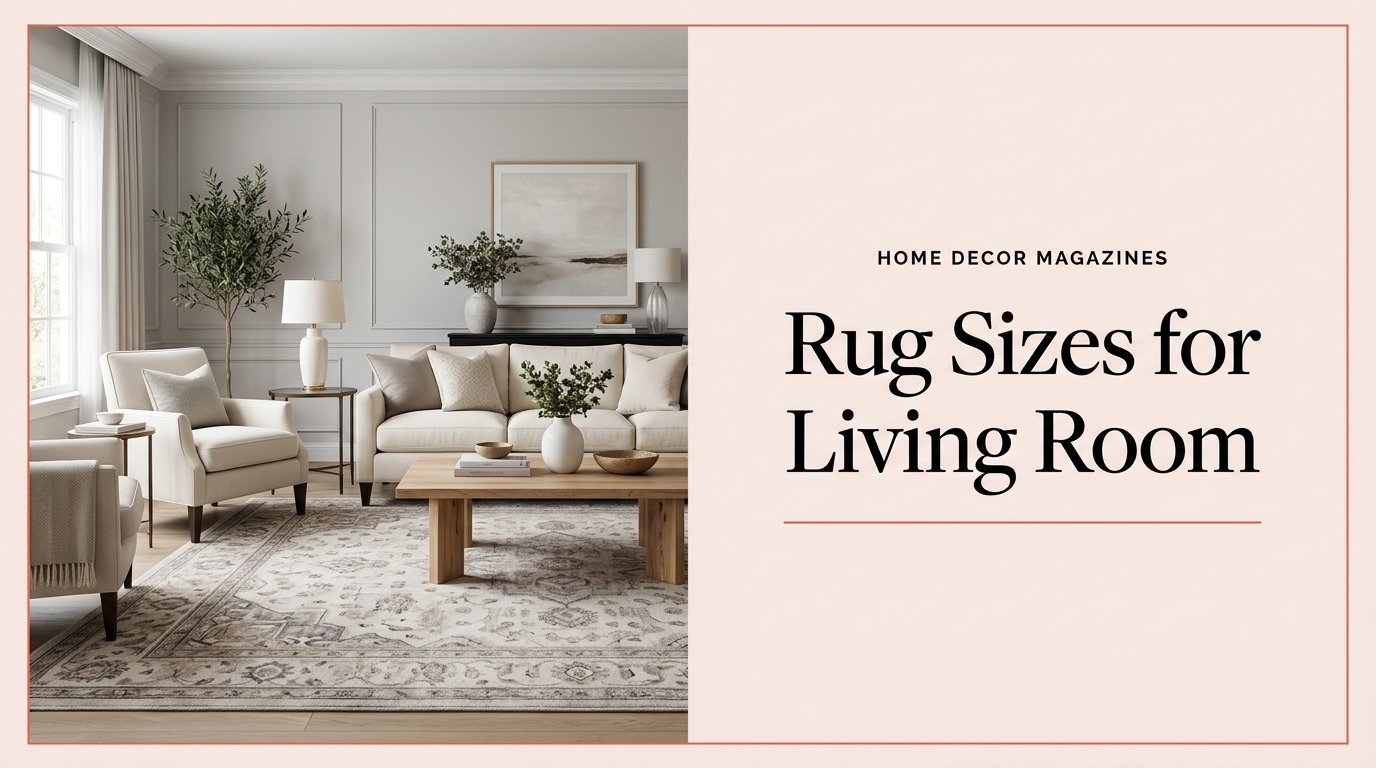
For most layouts, the front legs of the sofa and chairs should sit on the rug. For a larger, more unified look, all furniture legs can sit completely on the rug.
Living Room Rug Size Chart
| Rug Size | Best For | Typical Placement |
|---|---|---|
| 4×6 | Very small spaces | Coffee table/accent only |
| 5×8 | Small living rooms | Floating or front edge of seating |
| 6×9 | Small-to-medium rooms | Front legs on rug |
| 7×10 | Medium rooms | Front legs on rug |
| 8×10 | Standard living rooms | Sofa and chairs’ front legs on rug |
| 9×12 | Large living rooms | Front legs or all furniture on rug |
| 10×14 | Large/open rooms | All major furniture on rug |
| 12×15+ | Oversized rooms | Complete seating zone |
Standard rug guides commonly identify 8×10 as a strong choice for an average living room and 9×12 for larger seating areas.
1. 5×8 Rug for Living Room
A 5×8 rug is one of the smallest sizes that can work in a living room.
It’s best for:
- Small apartments
- Compact living rooms
- Loveseats
- Small sofas
- Studio apartments
- Reading areas
A 5×8 rug can work particularly well when the room has limited floor space and you don’t want the rug to dominate the entire room.
However, it is usually too small for a standard three-seat sofa combined with two accent chairs.
Best placement
Place the 5×8 rug underneath the coffee table and allow the seating to surround it.
If possible, position at least the front edge or front legs of the seating close enough to visually connect with the rug.
A 5×8 rug is generally better treated as a compact seating-area rug rather than a full-size living room anchor.
2. 6×9 Rug for Living Room
A 6×9 rug provides a useful middle ground between 5×8 and 8×10.
It’s a good option for:
- Small-to-medium living rooms
- Apartment living rooms
- Loveseats
- Compact three-seat sofas
- Sofa and one or two chairs
A 6×9 can work particularly well when an 8×10 would leave too little visible floor around the room.
Best placement
Use the front-legs-on arrangement.
Place the front legs of the sofa and chairs on the rug while leaving the back legs on the floor.
This visually connects the seating without requiring a very large rug.
3. 7×10 Rug for Living Room
A 7×10 rug is less common than 8×10 but can be extremely useful.
It works well when:
- 6×9 feels too small
- 8×10 feels too large
- The room is long and narrow
- You have a medium-size seating arrangement
A 7×10 can give you additional width and length without taking up as much floor space as an 8×10.
Best for:
Medium living rooms with a standard sofa and coffee table.
4. 8×10 Rug for Living Room
The 8×10 rug is one of the safest choices for a standard living room.
It works especially well with:
- Three-seat sofas
- Sofa + two chairs
- Sofa + loveseat
- Coffee tables
- Small sectionals
- Medium-size living rooms
Current sizing guides consistently identify 8×10 as a standard choice for average living rooms.
How to place an 8×10 rug
The most popular arrangement is:
Front legs of sofa and chairs on the rug.
The coffee table should sit completely on the rug.
This creates a connected seating zone while leaving some hardwood, tile, or other flooring visible around the rug.
Why 8×10 works so well
It provides enough surface area to connect multiple pieces of furniture without overwhelming a typical living room.
For many homes, 8×10 is the best balance between size, appearance, and cost.
5. 9×12 Rug for Living Room
If you’re deciding between 8×10 and 9×12, the 9×12 is usually the better choice when you have more space.
A 9×12 works particularly well for:
- Large living rooms
- Sectionals
- Large sofas
- Sofa + two chairs
- Open-concept rooms
- Larger coffee tables
- Formal seating arrangements
The additional two feet of length and width can make a significant difference.
Best placement
Use a 9×12 when you want:
All major furniture legs on the rug.
This creates a more unified and intentional appearance.
A 9×12 can also be used with only the front legs on the rug if you have a large seating arrangement but want more floor visible.
6. 10×14 Rug for Living Room
A 10×14 rug is best for large living rooms and open-concept spaces.
It’s appropriate for:
- Large sectionals
- Two sofas
- Large sofa + multiple chairs
- Oversized living rooms
- Open-plan seating areas
The larger size helps define the seating area without making the furniture appear disconnected.
If an 8×10 or 9×12 looks visually crowded beneath your furniture, moving up to 10×14 may be the solution.
7. 12×15 and Larger Rugs
Very large living rooms sometimes require rugs larger than the standard 8×10 or 9×12.
Consider 12×15 or larger if you have:
- Very high ceilings
- Large open rooms
- Multiple sofas
- Large sectionals
- Oversized seating groups
- Open-plan interiors
The goal isn’t to cover as much floor as possible.
The goal is to create a properly scaled seating zone.
8×10 vs. 9×12 Rug
This is one of the most common questions when choosing a living room rug.
| Feature | 8×10 | 9×12 |
|---|---|---|
| Room size | Small–medium/standard | Medium–large |
| Sofa | 3-seat | Large sofa/sectional |
| Chairs | 1–2 chairs | Multiple chairs |
| Front legs on rug | Excellent | Excellent |
| All furniture on rug | Sometimes | Much easier |
| Cost | Lower | Higher |
| Open floor | More visible | Less visible |
| Best overall use | Standard rooms | Larger seating zones |
Choose 8×10 if:
Your room is average-sized and your main seating arrangement consists of a sofa, coffee table, and one or two chairs.
Choose 9×12 if:
Your room is larger, you have a sectional, or you want the entire seating group to sit comfortably on the rug.
When you’re between two sizes, the larger rug is often the safer choice if the room can accommodate it.
Best Rug Size for a Sectional Sofa
Sectional sofas generally require a larger rug than standard three-seat sofas.
Recommended sizes:
Minimum: 8×10
Best: 9×12
Large sectional: 10×14
A sectional creates a larger seating footprint, so a small rug can easily look disconnected.
For a 9×12 rug, position the sectional so that the rug extends underneath the front portion of the seating.
If the room allows it, putting all the sectional legs on the rug creates an especially cohesive look.
Best Rug Size for a Sofa and Two Chairs
For a standard sofa with two accent chairs:
6×9
Works for smaller rooms.
8×10
Usually the best choice.
9×12
Best when you have a large room or want all furniture on the rug.
The key is ensuring both chairs make contact with the rug.
Don’t choose a rug that only reaches the sofa while leaving the chairs completely outside the seating zone.
Best Rug Size for a Small Living Room
For a small living room, start with:
5×8 or 6×9
If the room can accommodate it, an 8×10 can also work and may actually make the seating area feel more substantial.
The biggest mistake is assuming that a small room automatically needs a tiny rug.
A rug that’s too small can make the room feel fragmented.
Small-room tip
Use painter’s tape to mark the dimensions of the rug on the floor before buying.
This gives you an immediate visual reference and lets you test whether furniture doors and walkways still work.
Best Rug Size for a Large Living Room
Large living rooms generally need:
9×12, 10×14, or 12×15+
The larger the seating arrangement, the larger the rug should be.
For a large open room, the rug can also act as a visual boundary.
Instead of using walls to define the living room, the rug tells you:
This is the seating area.
Rug Placement for Living Room
Choosing the correct size is only half the job.
The placement matters just as much.
There are three main living room rug layouts.
1. All Furniture Legs On
All major furniture sits completely on the rug.
This is the most substantial and formal-looking arrangement.
Best for:
- Large rooms
- 9×12 rugs
- 10×14 rugs
- Open-plan spaces
- Large sectionals
This layout creates a strong visual connection between all furniture pieces.
2. Front Legs On
Only the front legs of the sofa and chairs sit on the rug.
This is probably the most practical arrangement for average living rooms.
Best for:
- 8×10 rugs
- 6×9 rugs
- Medium rooms
- Smaller budgets
- Standard sofas
The coffee table should sit completely on the rug.
This layout visually connects the seating without requiring a huge rug.
3. Floating Rug
The rug sits underneath the coffee table while the furniture remains completely off it.
This can work in very small rooms, but it needs to be intentional.
A small 5×8 rug can work this way, particularly with compact furniture.
For a standard living room, however, a floating rug can easily look undersized.
How Far Should a Rug Extend Beyond the Sofa?
Ideally, the rug should extend beyond the sofa’s ends enough to visually connect the seating arrangement.
A common guideline is approximately 6–8 inches beyond each end of the sofa, although the exact amount depends on the furniture and room layout.
For example, if your sofa is 84 inches wide, the rug should ideally be wider than the sofa.
This is another reason an 8×10 often works better than a 5×8 for a standard three-seat sofa.
How Much Floor Should Show Around a Living Room Rug?
You generally don’t want the rug pushed directly against every wall.
Leaving visible flooring around the perimeter helps the room feel intentional rather than wall-to-wall.
A common target is around 12–18 inches of visible floor between the rug and walls where space allows. Smaller rooms may require less.
The exact amount isn’t a strict rule.
Furniture placement matters more.
Should a Living Room Rug Be Centered on the Room or Furniture?
Center the rug around the seating arrangement rather than automatically centering it in the entire room.
This is especially important in:
- Open-plan rooms
- Rooms with fireplaces
- Rooms connected to dining areas
- Asymmetrical spaces
The rug should visually anchor the area where people actually sit.
How to Place a Rug Under a Coffee Table
The coffee table should normally sit completely on the rug.
This helps connect the coffee table to the sofa and chairs.
For a small rug, you may have the coffee table completely on the rug while the furniture sits around it.
For an 8×10 or 9×12 rug, the coffee table should sit comfortably within the rug with enough surrounding space.
Rug Size for Living Room With Fireplace
If your living room has a fireplace, orient the rug and seating toward the fireplace.
For a standard seating arrangement:
8×10: Good for a compact or medium room.
9×12: Better for larger rooms.
10×14: Best for a large seating zone.
The rug should help visually connect the sofa, chairs, coffee table, and fireplace.
Rug Size for Open Concept Living Room
Open-concept rooms need larger rugs because the rug helps define the living area.
An 8×10 can work for a compact seating zone.
A 9×12 or 10×14 is often better for a larger open-plan arrangement.
Don’t try to cover the entire open-concept floor.
Instead, use the rug to establish a clear boundary around the living room furniture.
Round Rug Sizes for Living Rooms
Rectangular rugs aren’t your only option.
Round rugs can work beautifully in:
- Small seating areas
- Conversation spaces
- Rooms with curved furniture
- Reading corners
- Circular coffee tables
Common round rug sizes include:
- 6-foot
- 8-foot
- 10-foot
An 8-foot round rug can work particularly well beneath a compact conversation area.
Runner Rugs in Living Rooms
A runner can work in a narrow living room or as an accent alongside furniture.
However, a runner usually shouldn’t replace the primary area rug in a standard living room.
Use a runner when:
- The room is very narrow
- You have a long walkway
- You want additional layering
- You’re defining a narrow passage
How to Measure for a Living Room Rug
Before buying your rug, follow these steps.
Step 1: Measure the sofa
Measure the complete width from one arm to the other.
Step 2: Measure the seating area
Include:
- Sofa
- Chairs
- Sectional
- Coffee table
- Ottoman
Step 3: Decide your placement
Choose between:
Front legs on
or
All legs on
Step 4: Mark the size
Use painter’s tape to mark the exact rug dimensions on your floor.
Step 5: Check walkways
Make sure doors and main walkways aren’t blocked.
Step 6: Compare two sizes
If you’re unsure between two sizes, tape both outlines and compare them.
This simple technique can prevent one of the most common rug-buying mistakes: purchasing a rug that looks large online but is too small once furniture is placed on it.
Common Living Room Rug Mistakes
Buying a Rug That’s Too Small
This is the biggest mistake.
A tiny rug underneath the coffee table can make the sofa and chairs feel disconnected.
Choosing the Rug Based Only on Room Size
The furniture layout matters more than the empty room dimensions.
Putting Only the Coffee Table on a Small Rug
This often makes the rug look like an oversized mat rather than an area rug.
Ignoring the Chairs
Every major seating piece should visually connect to the rug.
Pushing the Rug Against the Wall
Leave some visible flooring around the edges when possible.
Ignoring Door Clearance
Make sure doors can open without catching the rug.
Choosing the Cheapest Size Instead of the Correct Size
Saving money on a smaller rug doesn’t help if the rug makes the entire room look undersized.
How to Make a Small Rug Work
If you already own a rug that’s slightly smaller than ideal, you don’t necessarily need to replace it.
Try:
- Moving the sofa closer
- Using smaller chairs
- Centering the coffee table
- Creating a compact seating zone
- Layering the rug over a larger natural-fiber rug
Layering can make a smaller decorative rug work while providing the visual footprint of a larger area rug.
Rug Size by Living Room Dimensions
Here’s a practical starting point.
| Living Room Size | Suggested Rug |
|---|---|
| 8×10 ft | 5×8 |
| 10×12 ft | 5×8 or 6×9 |
| 10×14 ft | 6×9 or 8×10 |
| 12×15 ft | 8×10 |
| 12×18 ft | 8×10 or 9×12 |
| 14×18 ft | 9×12 |
| 15×20 ft | 9×12 or 10×14 |
| 16×20+ ft | 10×14 or 12×15+ |
These are starting points rather than strict rules. The furniture arrangement can change the ideal rug size considerably. Current guides similarly recommend sizing around the seating group rather than relying only on room dimensions.
Best Rug Size by Sofa Type
| Sofa Type | Minimum | Best Choice | Larger Option |
|---|---|---|---|
| Loveseat | 5×8 | 6×9 | 8×10 |
| 3-seat sofa | 6×9 | 8×10 | 9×12 |
| Sofa + chair | 6×9 | 8×10 | 9×12 |
| Sofa + 2 chairs | 6×9 | 8×10 | 9×12 |
| Sectional | 8×10 | 9×12 | 10×14 |
| Two sofas | 8×10 | 9×12 | 10×14 |
The sofa-first approach is more reliable than simply choosing a rug based on the square footage of the room.
What Is the Most Popular Living Room Rug Size?
8×10 is one of the most popular and versatile living room rug sizes.
It works well for a standard sofa, coffee table, and one or two chairs.
However, if the room is larger or you have a sectional, 9×12 may be a better choice.
The goal isn’t to choose the most popular size.
It’s to choose the size that properly anchors your furniture.
Is a 5×8 Rug Too Small for a Living Room?
It depends.
A 5×8 can work in a small apartment, compact living room, or seating area with a loveseat.
For a standard three-seat sofa with multiple chairs, however, it will often look too small.
If your budget allows, moving up to a 6×9 or 8×10 can make a significant difference.
Is an 8×10 Rug Big Enough for a Living Room?
For many standard living rooms, yes.
An 8×10 works particularly well with:
- Three-seat sofas
- One or two accent chairs
- Coffee tables
- Medium-size seating areas
If you have a large sectional or want all furniture completely on the rug, move up to 9×12 or 10×14.
Is a 9×12 Rug Too Big for a Living Room?
Not necessarily.
A 9×12 can be an excellent choice for a large living room.
It may be too large for a small apartment, but in a larger room it can create a beautifully unified seating area.
The important thing is to maintain usable walkways and enough visible floor around the rug.
Final Verdict
Choosing the right rug size for a living room is primarily about furniture scale and placement rather than simply matching the rug to the room dimensions.
For most standard living rooms, 8×10 is the safest starting point.
Choose 5×8 or 6×9 for smaller rooms and compact seating arrangements. Move to 9×12 when you have a larger living room, sectional, or multiple seating pieces. For very large or open-plan spaces, 10×14 or larger can create a much more proportional seating zone.
When in doubt, remember three rules:
1. Size the rug around the furniture.
2. Put at least the front legs of the main seating on the rug.
3. If the room can comfortably accommodate the larger size, going up is usually safer than going down.
A properly sized rug should make the furniture feel like one connected arrangement—not a collection of individual pieces sitting around a small island of fabric.
FAQs About Living Room Rug Sizes
What is the best rug size for a living room?
For most standard living rooms, 8×10 feet is one of the best choices. Larger rooms and sectionals often work better with a 9×12 rug.
Is 8×10 or 9×12 better for a living room?
Choose 8×10 for a standard living room and 9×12 for a larger room, sectional, or seating arrangement where you want more furniture on the rug.
What size rug should go under a sectional?
An 8×10 is usually a minimum, while 9×12 is often the better choice. A large sectional may need a 10×14 rug.
Should a rug go under the sofa?
Yes. Ideally, at least the front legs of the sofa should sit on the rug. In a larger room, putting all sofa legs on the rug can create a more cohesive appearance.
Should the coffee table be completely on the rug?
Yes. Keeping the coffee table completely on the rug helps visually connect it with the surrounding seating.
How much bigger should a rug be than the sofa?
Ideally, the rug should extend beyond the sofa on both sides. Around 6–8 inches beyond each end is a useful starting point, although the overall seating arrangement matters more than one exact measurement.
Is a 5×8 rug too small for a living room?
Not always. A 5×8 can work in a small living room, apartment, or loveseat arrangement. For a standard three-seat sofa with chairs, 6×9 or 8×10 is usually more appropriate.
What size rug works best in a small living room?
A 5×8 or 6×9 is a good starting point. An 8×10 can also work if the room has enough floor space.
What size rug works best in a large living room?
A 9×12, 10×14, or larger rug is generally better suited to a large seating arrangement.
Should the rug be centered in the living room?
Not necessarily. It should generally be centered around the seating group, especially in an open-concept or irregularly shaped room.
How much floor should show around a living room rug?
Around 12–18 inches of visible floor around the rug is a useful general target when the room allows it, but smaller rooms may require less.
Can you use a round rug in a living room?
Yes. Round rugs work particularly well with circular coffee tables, curved furniture, small conversation areas, and rooms where a rectangular rug feels too rigid.